Wednesday, February 5, 2014

Spellin' Hopscotch


Spellin Hopscotch - Create a 35-letter (vowels and R, S, T, and N are written twice), 10-row hopscotch grid on the floor, inside or outside.  Write their spelling words or sight words for their grade level on index cards (Note – asking teachers for these lists helps build relationships and partnerships).  


Children draw a card, read it, replace it, and then hops out the word. Children can hop spell answers to any science or social studies question.  Or use numbers and hop out math problems.  

We have also used this to sneak in some social studies.  Hopsctch was developed from myths about mazes and labyrinths – you can see how the game board fits into such a story.   Some versions of hopscotch grew from religious beliefs of a human soul’s journey from Earth to Heaven.  The oldest known Hopscotch board is etched into the floor of the Forum in Rome, Italy.  The game spread throughout Europe during the rise of the Roman Empire.  Children in Britain, France, and Germany were taught the game by soldiers.  Hopscotch is now one of the most widely played games in the world.

Long Love Lists


Long Love Lists - We like to use adding tape for this fun literacy activity.  We simply put up a long strip of adding tape (to add some novelty and fun) and give the kids a topic.  Something like list everything you love (Valentine’s Day); 


everything you are scared of (Halloween); everything that you are thankful for (Thanksgiving) or everything that is WET.  They might list water, milk, orange juice, etc.  Eventually spit and pee might make the list, so be prepared.

Wednesday, January 29, 2014

Oreo's Don't Phase Me: Phun with Moon Phases

We started out asking the kids what they already knew existed in space. 


Then we played a game that allowed every child to tell us what they already knew about space - and wrote it on post it notes and stuck them to our Guinea Pig - I mean...happy volunteer. 


She was covered so we knew a lot of things that existed in space. One prevalent answer was the moon. We talked about each how the moon's appearance change during the month and the names of each phase, after we drew them on the board. 

Wednesday, January 22, 2014

Constellations: Kids Create their Own

This is a fun, literacy activity we invented by accident - born out of imagination and a constellation conversation.

We were talking about stars and the groups of stars that form patterns when viewed from Earth - constellations. We talked about the 88 different constellations listed by the Greek astronomer Ptolemy.

We talked about some of the more famous constellations like the Big Dipper and Orion.

Then we began talking about how when we look at stars we can see other patterns that may look like animals, mythological creatures, people, or inanimate objects such as a microscope or a heart.


We gave the kids some black paper and foil stars and let them create artwork based on constellations from their imaginations. To sneak in a little literacy, they all wrote a paragraph about their imagination constellations.


We decided we could kick these projects up a notch by making them GLOW! We have the kids some fluorescent markers and paints and let them do their projects under a black light. This was an instant hit.

We have learned that it is a little easier to use WHITE paper and standard highlighter markers. The florescent colors show up much better on white paper and the highlighters are easier for children to write with (and less expensive) than florescent paint.

The kids LOVE writing their own florescent messages. 


This one is GLOWING literally and figuratively – GLOWING!


Sunday, January 12, 2014

Afterschool Constitution


Afterschool Constitution - In many afterschool programs, the adults develop and enforce the rules.  In many more programs, rules are generated through a discussion with the children.  Staff then help children rephrase their suggested rules for the official rules document.  Many programs do rules with kids, and then develop consequences for misbehavior through group discussion.  


Take this a step further and sneak in some social studies.  Print copies of the Bill of Rights, Declaration of Independence, Articles of Confederation, Constitutional Convention, and the US Constitution.  Talk with the children about the meaning and relevance of each.  


Announce your idea to create a “Constitution of the Children’s Choice Afterschool Program” (insert the name of your program here).  The goal is to capture the flavor of the US Constitution in your program document - “We the children, in order to form a more awesome program…”  Have them write an initial draft and revise it for clear communication of ideas, and edit it for all writing conventions.  


When the final document is complete, transfer it to a poster board and have a program meeting to review what they created and agreed to.  All children sign their “John Hancocks.” Take this a step further.  


Have kids create a U.S. Bill of Rights My Way! First put each amendment into modern context, by paraphrasing it using terms that they truly understand.  Each amendment is paraphrased in 10 words or less.  For Amendment #3 on the unlawful quartering of soldiers in homes during any time whether in peace time or war, our kids said, “No soldiers in my crib – never, ever!” 

Thursday, November 14, 2013

Thanksgiving Science


This week our afterschool science club is studying density. d = m/v... Density = mass per volume - or how much matter (stuff) is crammed in an amount of space. If a substance is less dense than water it has buoyancy... so it floats.

Since our study of density is happening so close to Thanksgiving, we decided to do some SINK or FLOAT experiments using some items from the typical Thanksgiving table.


We started with Sweet Potatoes! Yes, we tested both a fresh sweet potato and canned sweet potatoes! They both SUNK.


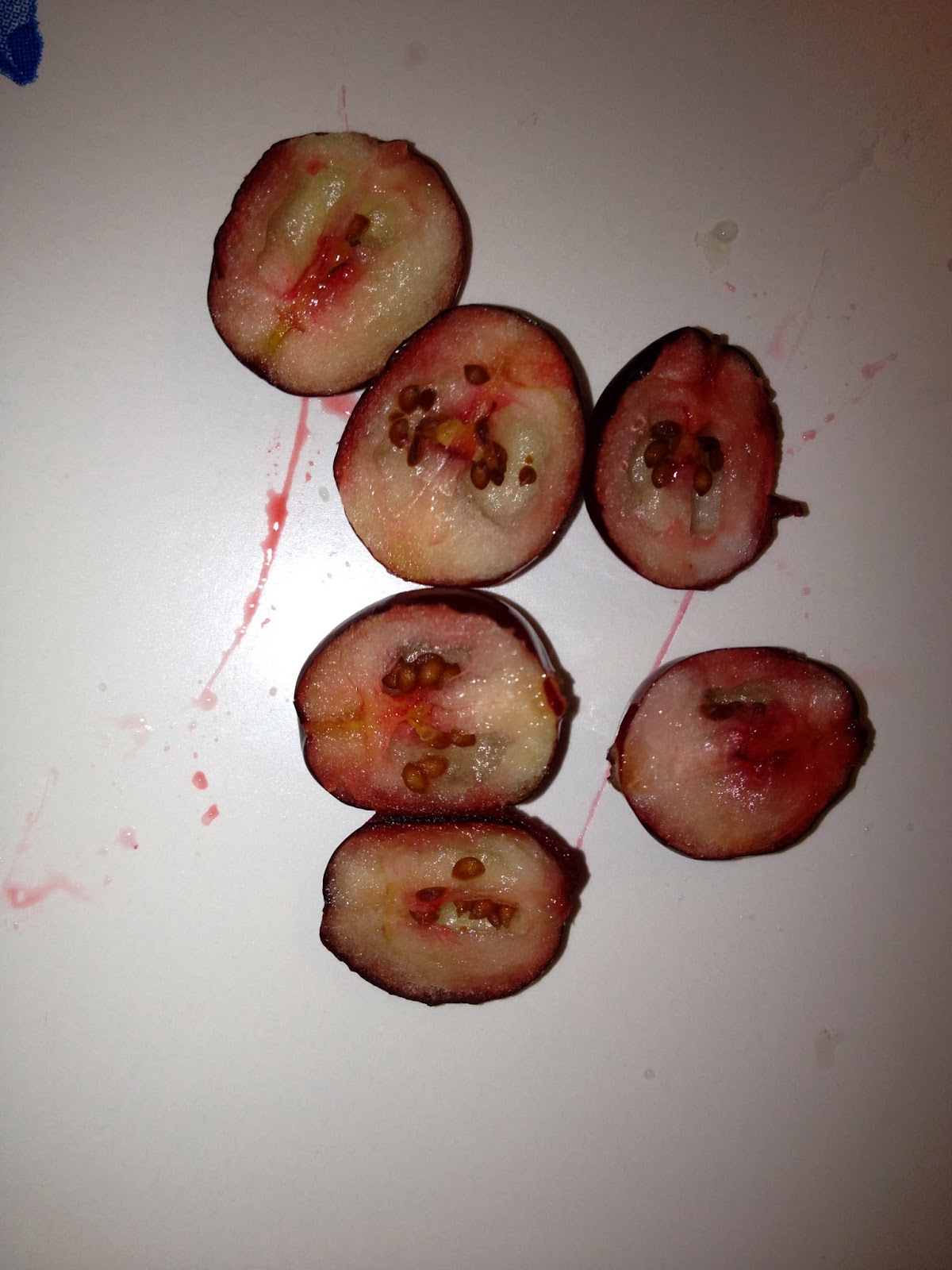
Then we tested cranberries! The fresh cranberries FLOATED, while both the canned varieties (both the whole berries AND the strange and creepy gelled variety) SUNK.


To discover why the fresh cranberries floated, the kids DISSECTED the cranberries. The reason was obvious. Upon cutting the fresh cranberries open we discovered they had hollow pockets of air inside which causes them to float.

We learned that to harvest cranberries, cranberry farmers flood the marshes or bogs with water and then drive a harvester through the flooded fields removing the ripe cranberries from the vines. The ripe cranberries float to the surface of the water for easy collection.

Next we tried to determine if turkeys would sink or float. We discovered that turkeys are very fast and extremely difficult to catch.


Thursday, November 7, 2013

Greedy Dice - a FUN Math Game!


Greedy Dice: Goal: Be the first player to rack up 1000 points by rolling the dice. Set up: Form groups of between 4 and 6 people. Each group gets six dice. The youngest player goes first, and play continues clockwise. 


Directions: On your turn, each player rolls all six dice. Separate the 1s and 5s from the rest of the dice. 1s are worth 100 points and 5s are worth 50 points. After each roll, players have the opportunity to either stay with (bank) the points they have earned and pass the dice to the next person, or get a little “greedy” and roll the remaining dice in an attempt to roll more 1s and 5s. You may roll as many times as you like, but if on any roll you do not get ANY 5s or 1s you lose all the points and the dice are passed to the next person. Play continues until one player scores 1000 points.
Follow mikeafterschool on Twitter